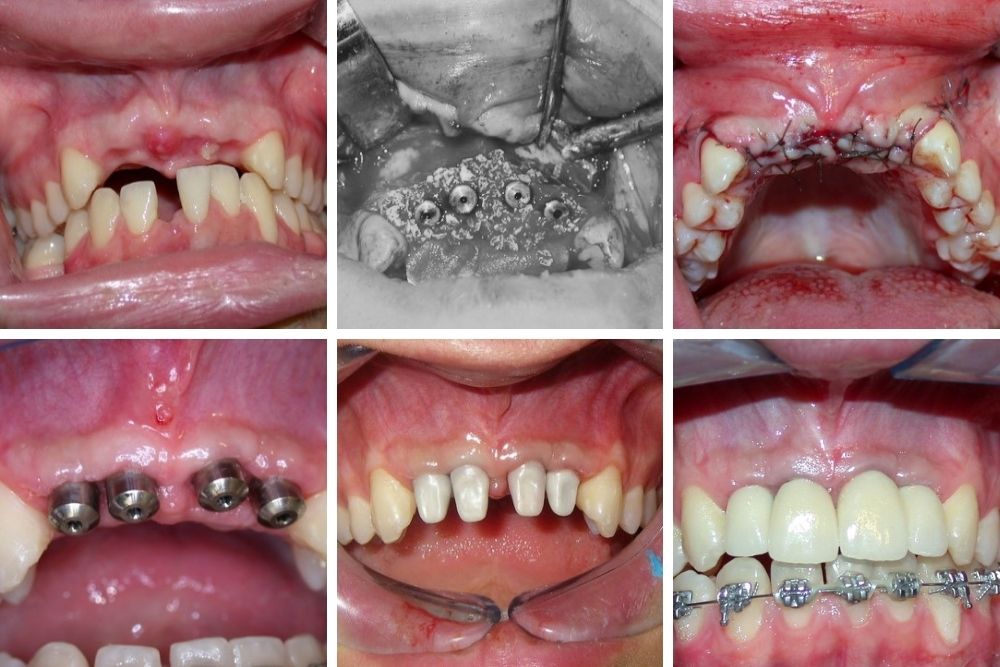
Dental implants are the superior replacement for natural teeth. When a patient has lost several teeth and it is not possible to create traditional bridges, only two solutions remain: one is the fabrication of dentures, and the other is the placement of implants followed by the installation of crowns and bridges.
Today, traditional removable dentures are less popular, as implants provide a far more functional and aesthetic alternative.

Dental implants are made of titanium, which is biocompatible and does not cause allergic reactions. This means the body accepts the implant as its own, allowing it to fuse with the bone and ensure long-term functionality.
In recent years, implants have also been crafted from zirconia for patients who prefer non-metal options or have specific titanium sensitivities.
The proven success rate of implant osseointegration with bone tissue is 95%. Therefore, dental implant placement causes no discomfort; patients feel them as their own teeth, and it is virtually impossible to distinguish them from natural teeth once the procedure is complete.
Dental Implants – Application
Partial or total edentulism is resolved by using the most advanced and reliable implants from renowned manufacturers such as Nobel Biocare and Straumann. By placing an implant, the adjacent teeth are preserved, as they would otherwise need to be ground down to support a traditional bridge.

Modern implants are usually produced in the form of a screw, and less commonly a cylinder. Using a specialized surgical technique, they are placed directly into the jawbone. Once placed, they provide a stable foundation for crowns or bridges.

The process of creating crowns and bridges on implants differs from the procedure used for natural tooth roots.
Implant Placement in Challenging Recipient Site Conditions
Indications for implant placement in an edentulous region may, in certain cases, involve a “complex placement” procedure. The most common challenge is a lack of jawbone due to alveolar ridge atrophy or a lowered sinus floor.
Depending on the extent of bone loss, bone grafting (osteotransplantation) may be indicated, which can be performed under local or general anesthesia.
In such cases, the standard 95% success rate may slightly decrease, as complications can sometimes be related to the grafting procedures themselves.
Fortunately, complications can be successfully managed and the lifespan of the implants extended, ensuring long-term function and aesthetics for the patient.