


Maxillofacial surgery is a medical specialty that involves knowledge and methods from medicine and dentistry, applied to the anatomical region of the head and neck.
The complex term maxillofacial originates from two Latin words, maxilla – jaw and facies-face. In some parts of the world, the term cranio-maxillofacial surgery is used since this activity also includes operations on the head and skull vault (lat. cranium).
In the USA, South America and in many parts of Asia, this activity is called oral and maxillofacial surgery, which implies that oral cavity and dental operations also belong to this surgical branch.
In these areas, the domain of maxillofacial surgery includes the following disciplines:
CORRECTION OF CONGENITAL AND ACQUIRED DEFORMITIES – WHAT DOES MAXILLOFACIAL SURGERY INCLUDE
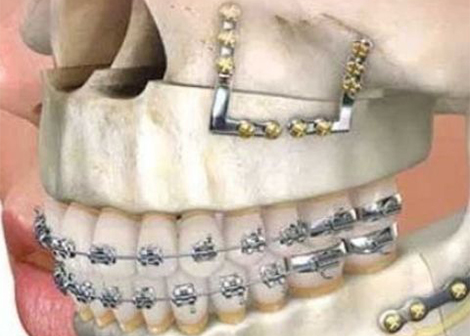
Patients with congenital or acquired jaw deformities are candidates for orthognathic surgery, i.e. corrective jaw surgery. Procedures in the domain of this surgical field are performed to correct and replace functional and aesthetic defects of the jaws and facial bones.
Some patients are born with an excessively protruding lower jaw (prognathism) or with an underdeveloped one (retrognathism). In patients with these deformities, surgical interventions are performed with the aim of establishing a harmonious relationship of all facial parts.
Facial deformities can also be the result of trauma: an injury in sports, a traffic accident, a blow with a blunt object or a fall. Injuries at work can also involve the facial region and be the cause of significant anomalies in the horizontal and vertical planes of the face.
INJURIES OF THE MAXILLOFACIAL REGION?
Injuries to the maxillofacial area are diverse and include
In addition to jaws and teeth, the nose, chin, cheekbones and bones of the frontal region can be injured and also require surgical intervention.