


Fractures of the facial bones and jaw may seem frightening, although they rarely threaten life. Injuries to the maxillofacial region carry a high degree of physical and psychological trauma for the patient due to their localization.
Traffic accidents, accidental falls, sports injuries, fights, and workplace injuries are just some of the numerous mechanisms that can lead to maxillofacial trauma.
Fractures of the facial bones and jaw are often associated with injuries to other parts of the body or organs (multitrauma), which determines the priority of treatment. Due to the complexity of injuries to other body parts that endanger the patient’s life, the treatment of maxillofacial injuries is postponed until the patient’s health condition stabilizes.
In certain cases of prolonged treatment and care for life-threatening injuries, primary care is replaced with reconstructive surgery.
TYPES OF FRACTURES IN THE MAXILLOFACIAL REGION
Fractures of the facial bones and jaw can be isolated or associated (multitrauma), and they include:
-
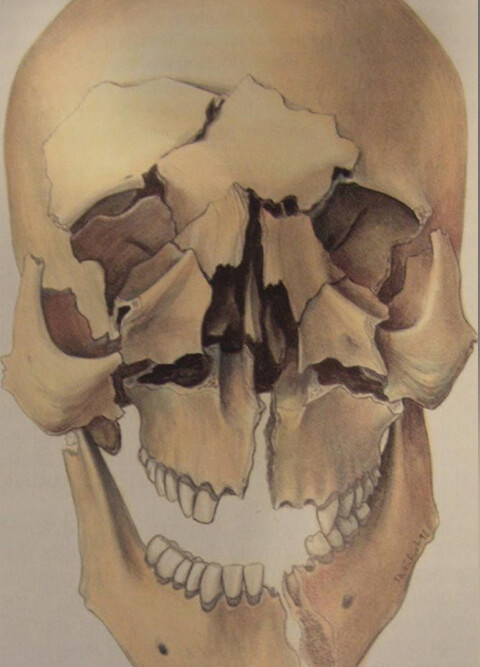
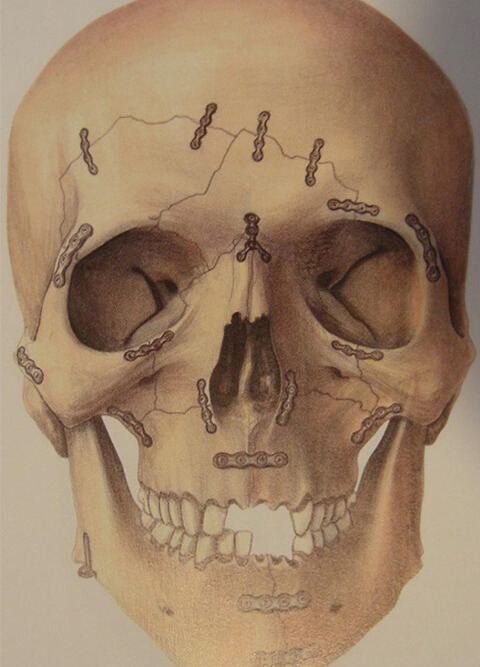
Pre Prelomi kostiju lica i vilica Posle
HOW ARE FRACTURES OF THE FACIAL AND JAW BONES TREATED?
Fractures of the facial bones and jaw are treated in a similar way to fractures of some other body parts. The specific treatment method is determined by a multitude of factors, including the location of the fracture, the nature of the fracture, the age, and the overall health of the patient.
When it comes to a broken arm or leg, a cast is usually applied to immobilize the bone and allow it to heal. Since a cast cannot be placed on the face, other methods have been developed to stabilize the facial bones.
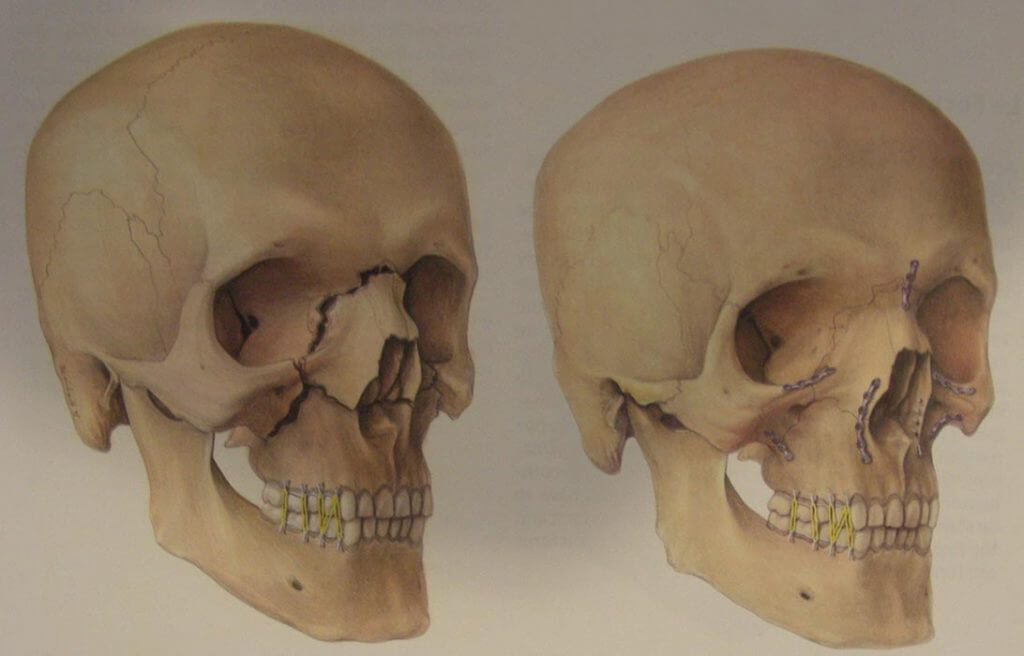
One of these involves binding the upper and lower jaws together. In some types of fractures, this is done with wires, while in others, it requires the surgical placement of mini-plates and screws on the fractured segments. This method allows the jaws to remain unbound during the healing period and is referred to as rigid fixation of the fracture.
The development of fracture treatment in this way has significantly improved the recovery period for many patients, enabling them to return to normal functioning in a relatively short time.
The treatment of fractures of the facial bones and jaw should occur in a predictable manner. All approaches to the facial bones should be conducted through only a few incisions. These incisions must be made at the right spots and, if possible, should be well-hidden.
TREATMENT OF TOOTH INJURIES AND SURROUNDING STRUCTURES
Isolated tooth injuries are quite common. Oral surgeons often perform replantation of avulsed teeth and repair fractures of injured bone sections.
Injuries of this type are treated by immobilizing the injured teeth with wire and adhesive substances, which bind them to neighboring teeth.
The avulsed tooth should be kept in saline or milk until replantation. The sooner the tooth is returned to the dental socket, the better the chances for successful recovery. One should never try to completely detach an injured tooth from its socket if it is still hanging by a few thread-like structures—these are the ligaments that hold the tooth in the jaw and are crucial for the success of replantation. In cases where the injured tooth cannot be saved, a dental implant is the best substitute for a natural tooth.