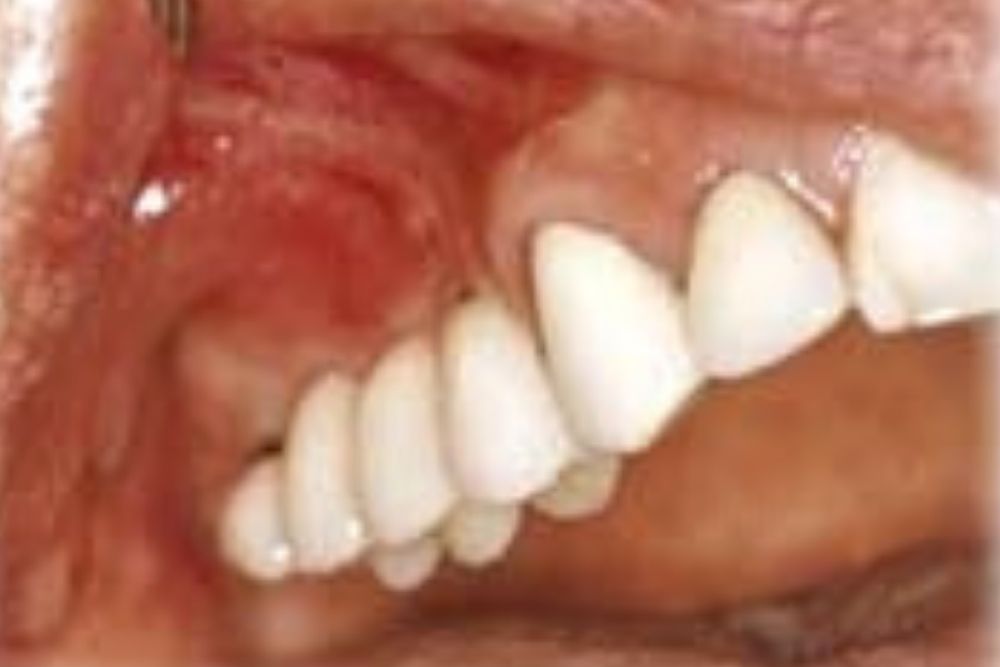
A sinus lift is a procedure for elevating the floor of the maxillary sinus (MS) to facilitate the placement of a dental implant.
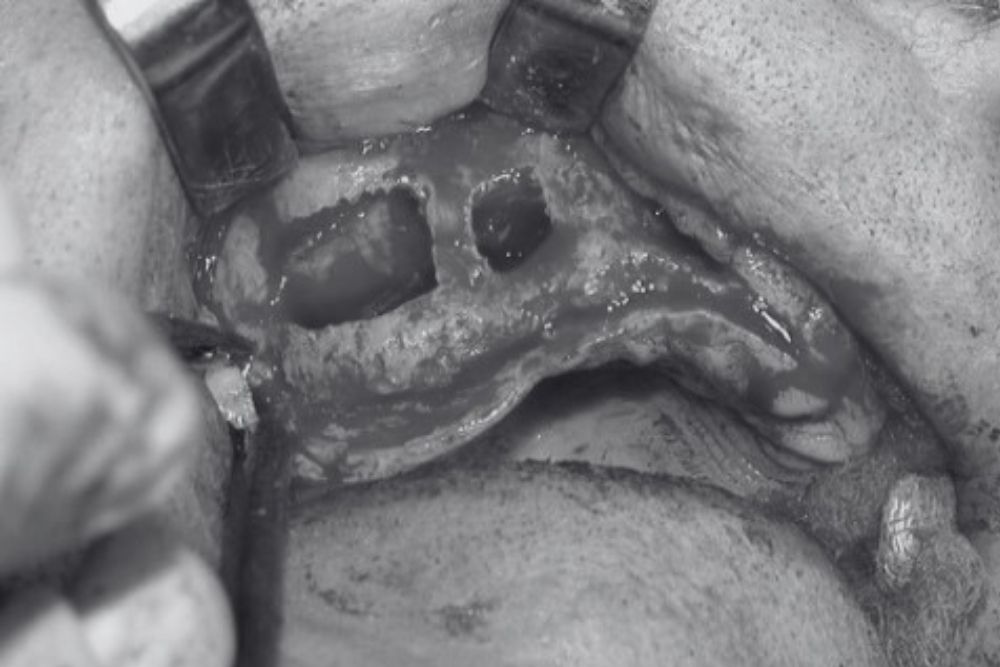
This oral surgical/implantological procedure is applied in cases of significant reduction in bone tissue volume following tooth loss.
WHAT IS A SINUS LIFT?
This surgical intervention involves lifting the membrane or mucosal floor of the maxillary sinuses to provide space for additional bone, while simultaneously protecting the sinus.
Depending on the condition, the procedure can be performed on one or both maxillary sinuses, and its efficacy is remarkably high—up to 94%.
The loss of maxillary bone volume is noticeable after the extraction of premolars and molars. If a patient needs to have a dental implant placed, bone augmentation is required.
INDICATIONS FOR PERFORMING A SINUS LIFT
When the height of the alveolar bone in the area of the maxillary sinus is less than 10 mm, one of the methods for “raising” the floor of the maxillary sinus is usually indicated. This helps avoid undesirable perforation of the mucosa and the intrusion of the implant into the sinus cavity.
For most surgical techniques of this type, the term “sinus lift” is used in the literature. Depending on the height of the alveolar bone, the lifting of the sinus floor can be performed in several ways.
WHO ARE CANDIDATES FOR A SINUS LIFT?
Candidates for a sinus lift include patients characterized by:
SURGICAL TECHNIQUES FOR SINUS LIFT
The sinus floor elevation can be performed in two ways. One is the so-called lateral approach, and the other is the transalveolar approach.
LATERAL APPROACH TO THE ELEVATION OF MS MUCOUS MEMBRANE
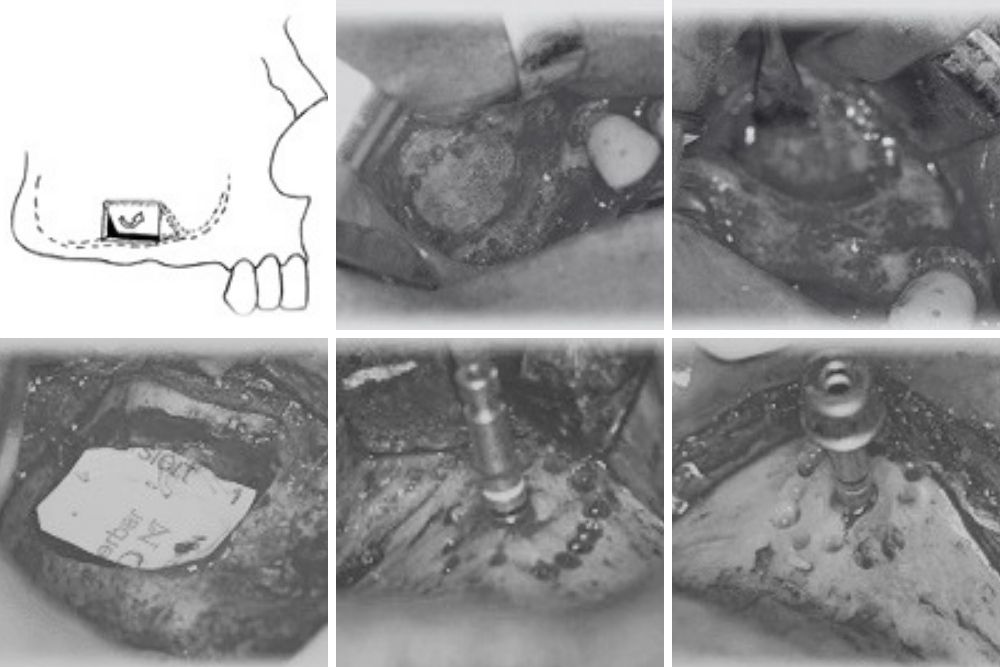
A trephination of the bone is performed on the lateral wall of the maxilla, slightly above the floor of the MS, using a suitable rotating instrument.
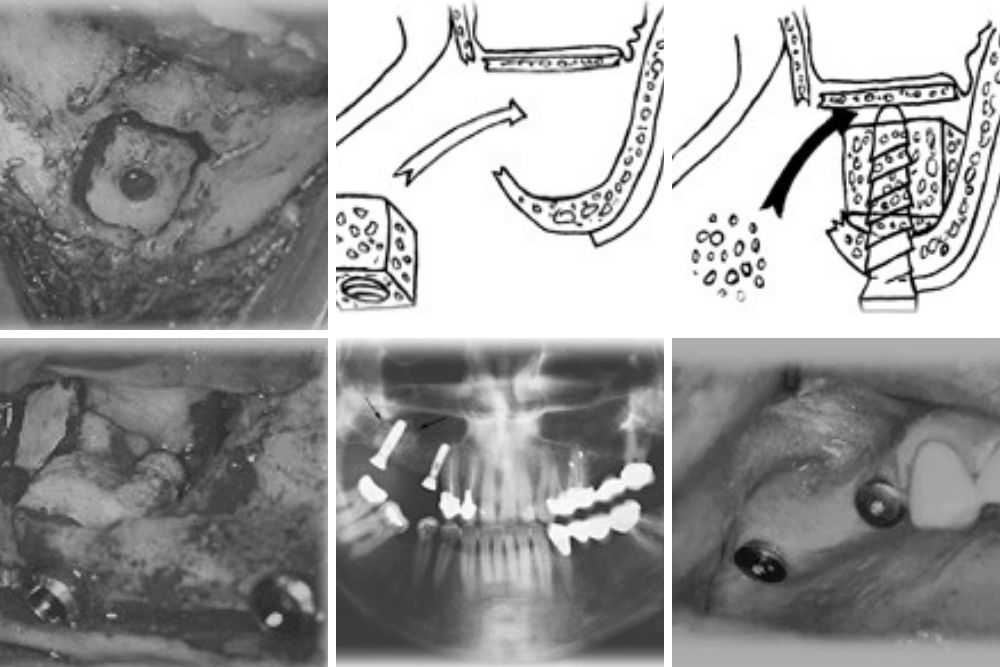
Then, using special elevators, the MS mucosa is lifted from the floor, as well as the inner and lateral walls of the maxilla, creating space for inserting bone or PRF (Platelet-Rich Fibrin).
With this approach, it is possible to simultaneously place an implant or only perform augmentation of the sinus floor, with the implant placement deferred for 6–9 months, depending on the material used.
LATERAL APPROACH TO THE ELEVATION OF MS MUCOUS MEMBRANE
When it is necessary to raise the floor of the maxillary sinus by 1–2 mm, the so-called transalveolar approach or the approach through the implant bed is used.
The bone preparation for implant placement stops about 1 mm above the floor of the sinus. Then, with a suitable instrument and gentle blows from a mallet, the floor of the sinus is fractured and carefully moved upward.