


The absence of a single tooth is an indication for dental restoration in the form of an implant.
Due to the lack of only one tooth, over time, the neighboring remaining teeth may shift, disrupting their position. Teeth naturally rely on one another for support and help stabilize those in the opposing jaw. It is very important to preserve their number and proper arrangement, so tooth loss must be compensated.
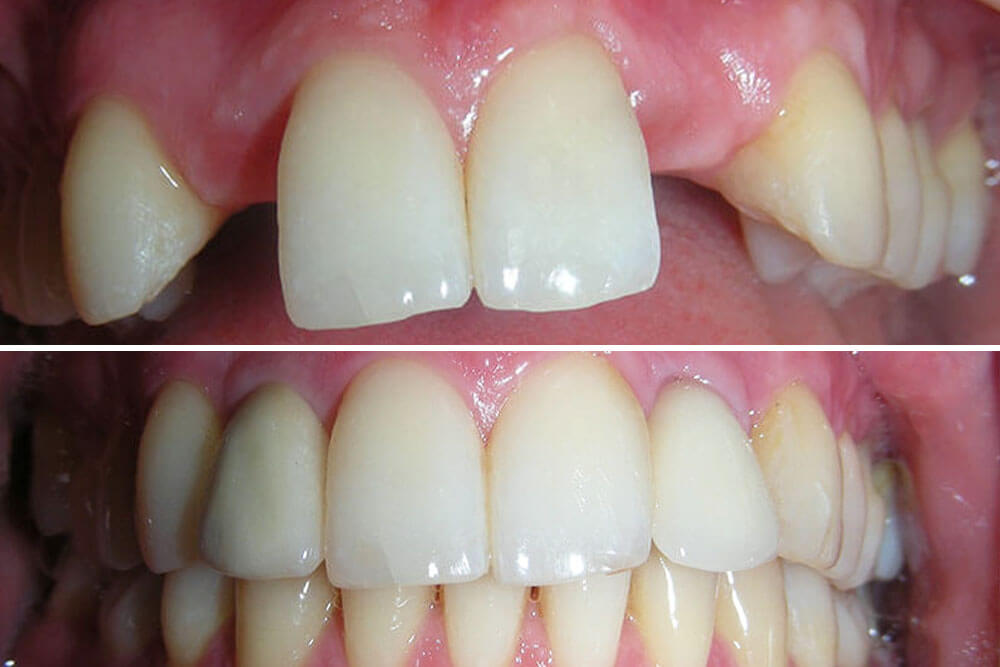
If the jaw is characterized by the absence of one tooth, the best solution is to place an implant in the alveolar bone. This way, the preparation of neighboring teeth for crowns and the fabrication of a bridge can be avoided.
ROLE OF THE IMPLANT IN TOOTH RESTORATION
Dental implants are specialized screws that are implanted into the upper or lower jaw in place of the missing tooth. Made of titanium or zirconia, which are biocompatible, they integrate excellently with the bone and do not cause a foreign body rejection reaction.
Since they mimic the root of a natural tooth, they can replace any tooth. Therefore, a dental implant can be found in place of any extracted upper or lower incisor, molar, or any other tooth
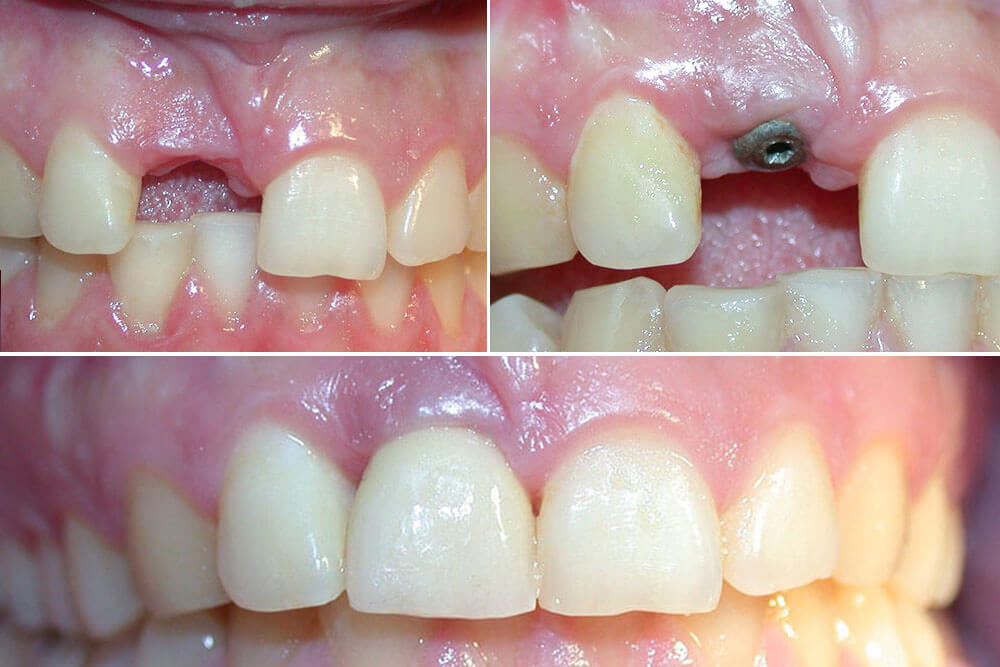
Successful placement and osseointegration without complications give patients the feeling of having their own teeth again.
LACK OF A SINGLE TOOTH AND THE IMPLANT PLACEMENT PROCESS
Dental implant placement is most commonly performed under local anesthesia or analgesosedation. In the first phase, the implant is surgically inserted into the alveolar bone and is protected from loading until the osseointegration process is complete.
After the alveolar tissue has integrated around the implant and the abutment (the superstructure that will serve as a holder and stabilizer for the crown) has been positioned, a metal-ceramic or zirconia-ceramic crown is placed.
LACK OF A SINGLE TOOTH AND IMMEDIATE LOADING OF THE IMPLANT
Today, there are dental implants on the market designed for so-called immediate placement and loading.
For example, the Nobel Active implant is designed to achieve great resistance and strength even when placed into soft bone.
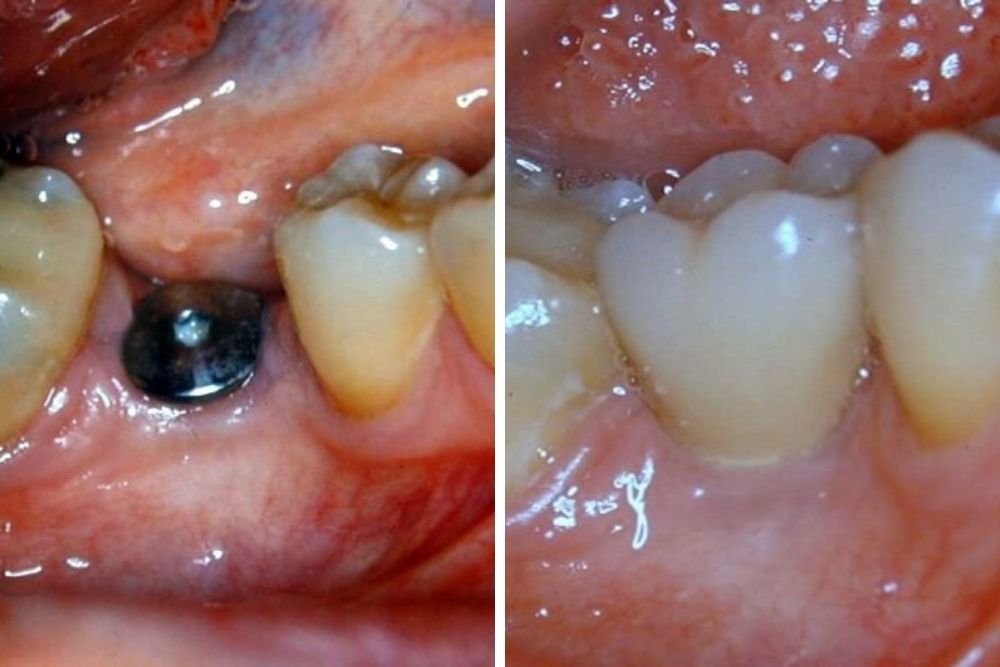
In this case, a temporary crown made of suitable material is created immediately, which serves until the definitive crown is fabricated. This period usually lasts about three months.
TOOTH EXTRACTION AND IMMEDIATE IMPLANT PLACEMENT WITH IMMEDIATE LOADING
The aforementioned Nobel Active implant can be placed immediately after tooth extraction and achieve sufficient strength for the simultaneous creation of a provisional crown.
In such cases, it is also necessary to fill the bone defect that remains after tooth extraction.
